Amritsar에서 서쪽으로 약 30킬로를 달려 도착한곳은, 국경지역인 Wagah에 있는 Arari라는 조그만 시골로, 인도와 파키스탄 국경을 합법적으로 건널수 있는 국경동네이다. 수백명의 인도인들이 벌써 운집해 있었고, 몰지각한 일부 꾼들은 관중속을 뚫고 다니면서 해적판 Beyonce CD를 팔기도하고, Taj Mahal 조각품과 인도전통 캔디종류인 Jalebi를 팔기에 여념이 없었다.
시멘트로 만든, 관측소의 밖에서는 두줄로 나누어 서있는 관람객들이 기다리고 있었고, 한줄은 여자, 다른 한줄은 남자를 위한것이다. 인도처럼 북적거리는 곳에는 예상치않게 스스로 줄을 이루고 기다린다.
나는 내남편과 짧은 시간이지만 안녕 인사를 건네고, 형형색색의 사리로 휘황찬란하게 두른 여인들이 서있는 줄속에 합류했다. 훤칠한키의 국경수비대 한명이 내어깨를 툭툭치면서 내남편에게 신호를 보내고, 외국인들은 남녀가 함께 줄을 서서 구경하는게 허용된다고 알려 주기도 했다.
우리 부부의 여권을 점검한후에 간단한 몸수색을 마치고 우리는 국경지역을 향해 포장된 긴 통로로 안내되였다. 바로 그곳에서 국경폐쇄식이 진행될곳이었다.
포장된 통로는 약 100미터정도로 반듯하게 인도쪽 국경을 향해 펼쳐져 있었다. 이곳에 설치된 철문을 통해 구경꾼들은 파키스탄 지역으로 건너간다. 본부석 좌석과 길가 양쪽에 있는 좌석에는 그대로 앉는게 아니고 직위에 따라 앉는 자리가 정해져 있는것 같았다. 인도쪽의 손님과 VIP들은 국경에 인접해 있는 게이트(Gate)에 가까운곳에 있는 좌석이고, 그다음으로 시멘트로 된 좌석은 외국인들용이다. 우리의 뒤에 있는 갓길과 특석이 있는곳에 인도의 남자,여자 그리고 아이들이 앉아 있었다.
우리가 앉아 있는 곳으로 부터, 50미터 채 안떨어져 있는, 국경검문소 건너편으로는 좌석이 확연히 보이고 있었다. 파키스탄쪽의 좌석은 남 녀 구분된 좌석배열이 되여 있었다. 많은 여자들을 노래에 따라 손벽을 치면서, 초록색과 흰색바탕의 파키스탄 국기를 흔들면서 옆의 사람들과 흥미롭게 얘기를 나누고 있었다.
왼쪽으로 바삐 움직이는 그릇을 보면서 파키스탄에서 온 관람객 남자들의 굳어져 있는 얼굴이 보여졌는데, 그들은 아무런 반응이나, 초점없이 눈만 껌벅이고 있었다.
Clad in a white tracksuit, our MC for the evening encouraged shouts of "Hindustan Zindabad!” (long live India!) from our side of the border, while echoes of "Pakistan!" could be heard coming back from across the gate. Clapping, dancing and general frivolity were set against the catchy tempo of “Jai Ho”, from the movie Slumdog Millionaire. It was hard to remember that we were literally toeing the line between two countries that have a tumultuous and violent relationship.
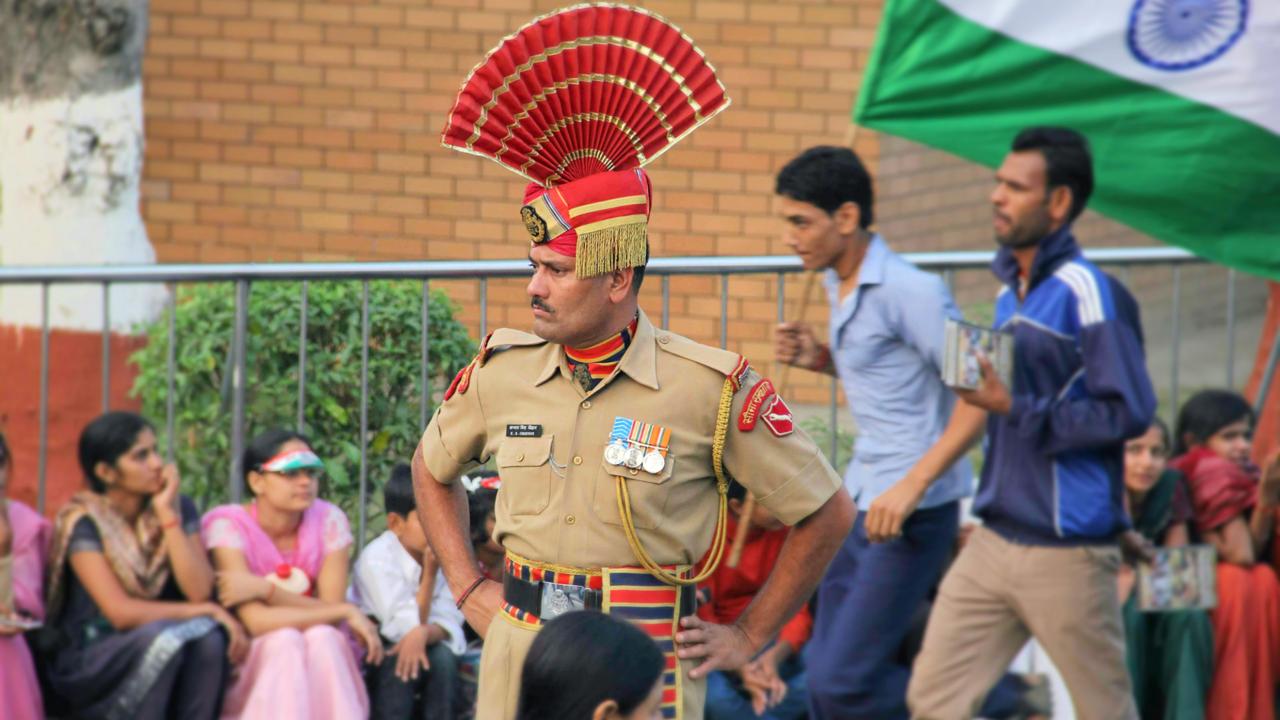
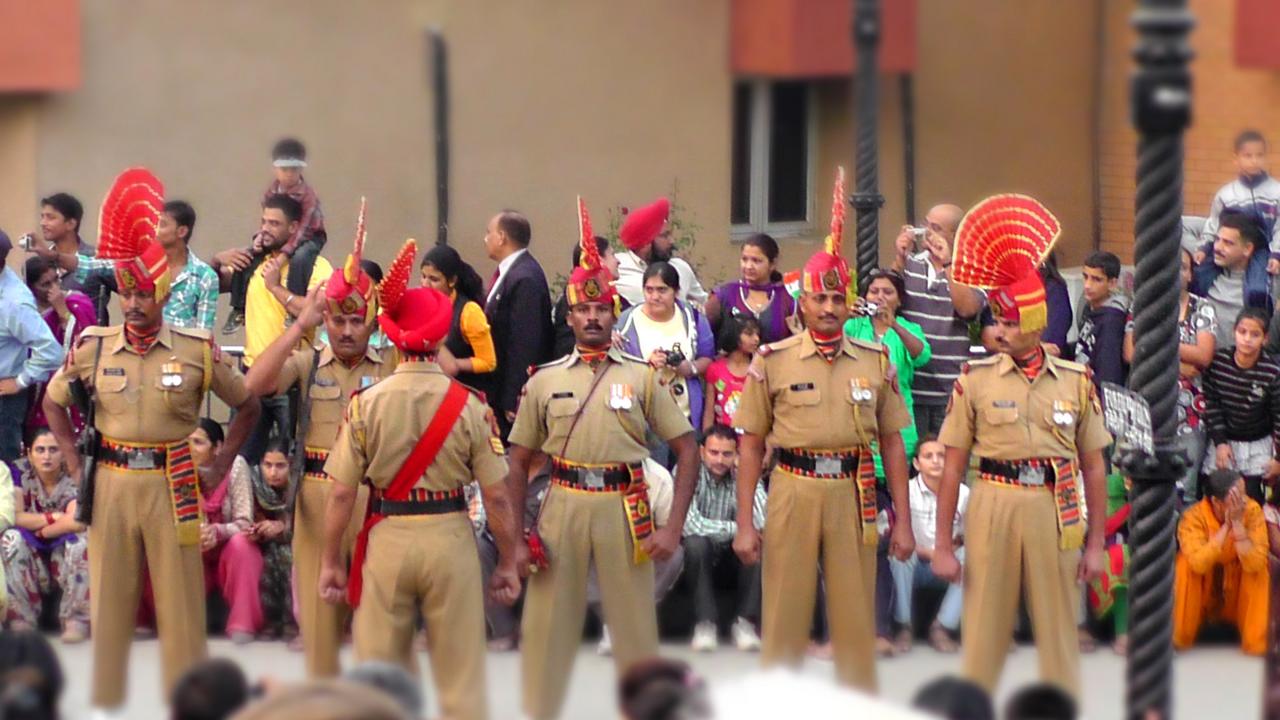
The ceremony began with a bang. Or, rather, a yell. The participating Indian border guards appeared in their official khaki uniforms, draped in prestigious medals and donning sky-high red-fanned hats that resembled the plumage of a macaw.
A stone-faced guard stepped up to the microphone, inhaled deeply and then let out a long bellowing yell that was echoed from the other side. He was in direct competition with his Pakistani counterpart. Two men from two different countries, less than 100m apart, were participating in a good old-fashioned scream-off.
Once our guard was finished with his battle call (the Pakistani guard outlasted him by mere seconds), he briskly marched down the lane towards Pakistan with five of his barrel-chested companions following suit. They strutted to the centre of the road and began a series of synchronised stomps and kicks, their extravagantly plumed headgear and severe expressions miraculously never wavering. Every now and then, a guard would send a menacing glare towards the Pakistan border as if to intimidate his rivals.
At this point, the patriotism in the crowd was palpable; each section was roaring with cheers and applause. The border guard that had led the battle call took off down the road, completing a series of stomps and high kicks at the gate – at one point almost kneeing himself in the nose. His Pakistani counterpart was completing his own staccato dance of martial arts manoeuvres. They ended at the same time, concluding with a long-held death stare aimed towards the other.
This machismo display continued for another 20 minutes, with each of the six competing guards having his time to shine. I found myself relishing in the revelry, clapping to the music and gasping when a guard accomplished a particularly high kick. The intense performers continued their routines with all the pizazz one would expect from Michael Jackson wannabes, cheered on by the enthusiastic crowd.
The show came to an almost anticlimactic end when each nation’s flag was lowered at precisely the same time. If I had blinked, I would have missed the brief handshake (a display of good faith) exchanged between the two head guards. And with the final fanfare, the gates were satisfyingly slammed shut.
As the crowd began to disperse, my husband and I remained seated, absorbing what we had just witnessed. India and Pakistan may have a long history of conflict. But it’s also heart-warming to know that every night, just for a brief moment, both countries are unified through the closing of their border gates.