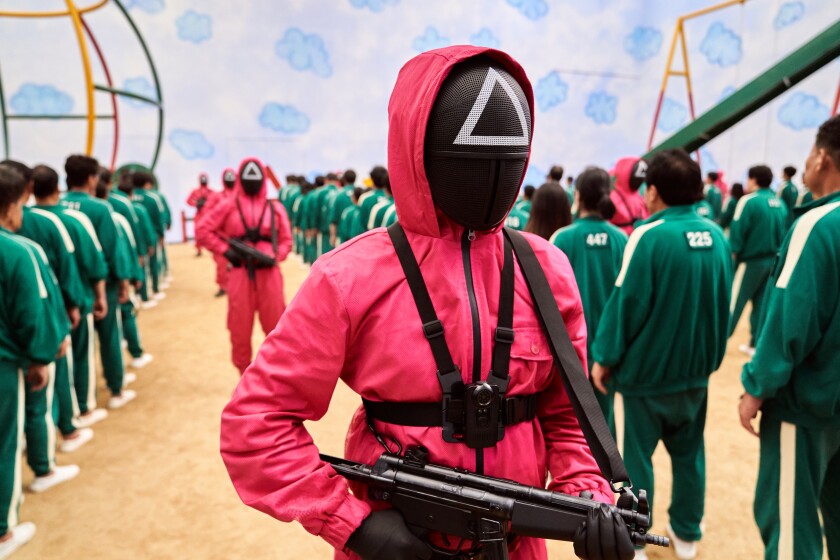
세계적으로 인기를 끌고있는 "오징어게임" 연속극을 보면, 관객의 입장에서는 재미가 있어서 계속보고 있겠지만, 그연속극의 주인공들인 456명의 빚쟁이들이 겪고있는, 오늘날 한국의 경제 실정을 그대로 반영하는 대한민국의 수치를 전세계에 보여주고있는 비극이라고 나는 정의한다.

대선 앞둔 한국사회와 연결 “대선 앞두고 암울한 상황”
넷플릭스 드라마 ‘오징어 게임’이 미국 국무부의 외교 전문(cable)에 소재로 등장했다고 미 외교전문지 포린폴리시(FP)가 15일(현지시각) 보도했다. 전문은 이 드라마가 암울한 한국 경제의 좌절감을 반영하고 있다고 분석했다.
FP는 이날 ‘국무부 전문은 오징어 게임에서 한국 정치 메아리를 보고 있다’는 제목의 기사에서 “(전문은) 오징어 게임이 내년 한국의 대통령 선거를 앞두고 암울한 경제 상황에 관한 한국 사회의 좌절감을 반영한 것”이라며 “오징어 게임은 한국 양당 모두 부패 의혹으로 얼룩져 있는 한국 대선 상황의 정치적 시대정신을 포착한 것”이라고 했다. 이어 “(오징어 게임의) 어두운 이야기의 중심에는 평균적 한국인이 느끼는 좌절감이 있다”고 했다.
이어 두 주요 정당의 대선 경쟁자들이 공정하고 정의로운 사회 건설을 내세우지만 이들의 주장은 청년층 사이에서 이미 커지고 있는 정치적 냉소주의의 원인이 되고 있다고 했다.
그러면서 FP는 민주당 이재명 대선 후보가 대장동 의혹으로, 국민의힘 윤석열 전 검찰총장이 가족의 비위 의혹으로 논란에 휩싸였다고 했다. 전문은 한국 언론의 정보원과 비평가들이 오징어 게임의 호소력을 한국의 승자 독식 사회와 계층 불평등에 대한 이 드라마의 묘사에 있다고 본다는 내용도 담았다.
전문은 “한국이 2003년 이후 지속적으로 OECD 국가 중 가장 높은 자살률을 기록했으며, 2020년에는 19세에서 29세 사이의 한국인들의 상승 이동 가능성을 비관하는 젊은이들이 늘어나면서 사망의 주요 원인이 됐다”고 했다.
이어 FP는 “1970년대 이후론 실제 전보를 통해 전송되지 않고 있는 외교 전문은 해외 외교관들이 (속한) 각 나라의 동향 분석, 중요한 회의 내용 보고, 정책 권고 등에 활용되고 있다”고 했다. FP는 누가 전문을 작성했는지 밝히지 않았지만, 주한미대사관일 가능성이 큰 것으로 보인다. 국무부는 이 전문에 대한 입장을 밝히지 않았다고 FP는 전했다.
The business card, tossed with expert precision from a motorcycle as it sped away, landed at Park Chui-woo’s feet just as he was nearing the end of his wits.
The brightly colored card advertised quick low-interest loans, especially to small business owners. Maxed out on all other lines of credit and with payday looming for the employees of his small chain of coffee shops, Park dialed the phone number.
With that call three years ago, he entered the underground world of illegal private lending that tempts desperate South Koreans, then ensnares them with crippling interest rates, oppressive collection methods and a slippery slope leading to more debt.
Soon, motorcycle-riding, tatted-up skinheads showed up to talk terms with Park. They dropped off a wad of cash and began coming by his store daily to collect interest, at an annualized rate of about 210%.
“You really have no other choice,” said Park, 45, who has been borrowing from private loan sharks for about three years and has had to increase the sum after the COVID-19 pandemic gutted sales at his coffee shops. “It can send you down a sand-pit trap.”

Debt is the primary motivator for characters in the Netflix hit “Squid Game,” a dystopian drama series in which 456 participants who are heavy in debt fight to the death — literally — for a chance at a life-changing windfall of 45.6 billion won (about $40 million).
The South Korean series has resonated worldwide, tapping into growing economic fears and becoming the streaming service’s most popular release to date, with 111 million views in the first 28 days. At home, though, the show’s popularity has been inseparable from the country’s very real crisis of mounting household debt, gaping inequality and a weak social safety net with significant blind spots.
South Korea’s household debt ballooned to record levels in the second quarter of 2021, jumping by more than 10% from the same period last year. Citizens in their 30s are the most heavily leveraged, having borrowed on average more than 260% of their income, according to the Bank of Korea. Soaring real estate prices and last year’s stock market surge have fueled borrowing, incentivizing young adults who see less promise in traditional employment and have turned to investing heavily in stocks or cryptocurrencies.
Official statistics don’t capture the illicit world of private lending turned to by Park and the protagonist of “Squid Game,” Seong Gi-hun, when they could no longer borrow from banks and legally registered lenders, whose loans are capped by law at an annual interest rate of 20%.
At the outset of the series, Seong, a laid-off auto worker plagued by a gambling addiction after failed attempts at starting businesses, is chased by black-suited, knife-wielding lenders who force him to sign a pledge to give up a kidney and an eye if he doesn’t repay in a month. Seong, played by Lee Jung-jae, then steps into the “Squid Game,” where the debt of each character is revealed, and childhood games like “Red Light, Green Light” turn brutal.
“All of you in this room have crippling debts and are now on a cliff edge,” a game runner tells those assembled. “Do you want to go back and live out your pathetic lives running from creditors? Or will you seize the last opportunity we are offering?”

South Korea’s shadowy lending business is hard to quantify but appears ubiquitous. Cards and fliers advertising quick cash are readily seen on subway cars, bus stops and lamp posts. The government regulator, Financial Supervisory Service, received nearly 300,000 reports of illegal lending advertisements in 2020. That was an increase of about 25% from the previous year, undoubtedly spurred by pandemic-related layoffs and business restrictions that pushed the already vulnerable deeper into financial straits.
The Seoul-based industry group Consumer Loan Finance Assn. said it mediated more than 5,000 reported high-interest loan cases last year, in which the average annual interest charged was 401%. In one case in Gyeonggi province, which includes parts of the metropolitan area surrounding Seoul, the interest on a short-term loan amounted to 3,338% annualized, according to police.
“Murderous interest rates are being charged beneath the surface,” said Seo Bo-kuk, a senior manager at the Consumer Loan Finance Assn. “It becomes a domino effect, and many people end up turning to it again and again.”

Contracts that call for a kidney or eyeball in lieu of repayment are an intimidation tactic of yore and are no longer common, industry officials say. Even so, they are depicted in “Squid Game” and other TV shows and movies, breeding fear among those indebted to scurrilous lenders. The richest man in South Korea, Seo Jung-jin, founder of biopharmaceutical company Celltrion, has said in interviews that he had to sign away his organs as collateral to borrow from loan sharks to keep his company afloat following the Asian financial crisis of the early 2000s.
“My debt wouldn’t be covered even if I sold all my organs,” said Park, the coffee shop owner, who noted that his lenders have never brought up such pledges.
Nowadays, lenders demand the phone numbers of debtors’ relatives and friends in order to harass them if the debt isn’t paid on time, or they show up at the debtors’ workplaces, according to industry accounts. Some go further. In 2017, a 27-year-old private lender in the city of Incheon was sentenced to five years in prison for sexually assaulting a woman who owed him about $8,500.
“People turn to it knowing it’s steep interest rates,” said Jung Deok-gil, a supervisory investigator at the Gyeonggi province special judicial police division. “They use it because they need the money that desperately but don’t have the credit.”
Park said illegal creditors have been a lifeline to pay his employees and keep his shops open. Earlier this year, he managed to wean himself off the loans but returned to them a couple of months ago when extended pandemic restrictions and other complications hurt his business. At the moment, he has two 60-day loans of 20 million won (about $17,000) each. In all, he is about $850,000 in debt, legal and otherwise.
“I have no bitcoin or stocks or real estate or an inheritance,” he said. “For someone like me, in the South Korean financial system, we can’t do without private lending.”

For now, he’s barely hanging on — relieved that he made October’s payroll. He hasn’t had time to watch “Squid Game” or give it much thought beyond skimming headlines about the show. Reality in South Korea, for him, is dystopian enough.
“Once COVID-19 is over, it might be a whole other game,” he said. “All the social problems we’ve swept under the table and pushed off dealing with during the pandemic — that’s an enormous ticking time bomb.”
https://www.chosun.com/international/us/2021/10/17/PXV3UQO3TRFMZEKVR3NSGJBVDE/
No comments:
Post a Comment